The $39 Dispute I Almost Didn't File
Move. That is the principle I thought I had fully absorbed. Do not wait for perfect conditions. Do not stall behind the illusion of preparation. When something needs doing, do it.
I thought I understood this deeply. Then a $39 charge reminded me I was still capable of forgetting it entirely.
What happened
I signed up for a software trial. One dollar to test it, $39 monthly if I stayed. I tested it, decided it was not useful, and canceled. A few weeks later, the $39 hit my account anyway.
It was not about the money. It was the wrongness of it. The merchant had made an error and I knew it.
My first response was to do nothing. Not consciously. I told myself I was thinking it through. What I was actually doing was manufacturing reasons to stay still. Is it worth the time? The energy? It is thirty-nine dollars. Let it go.
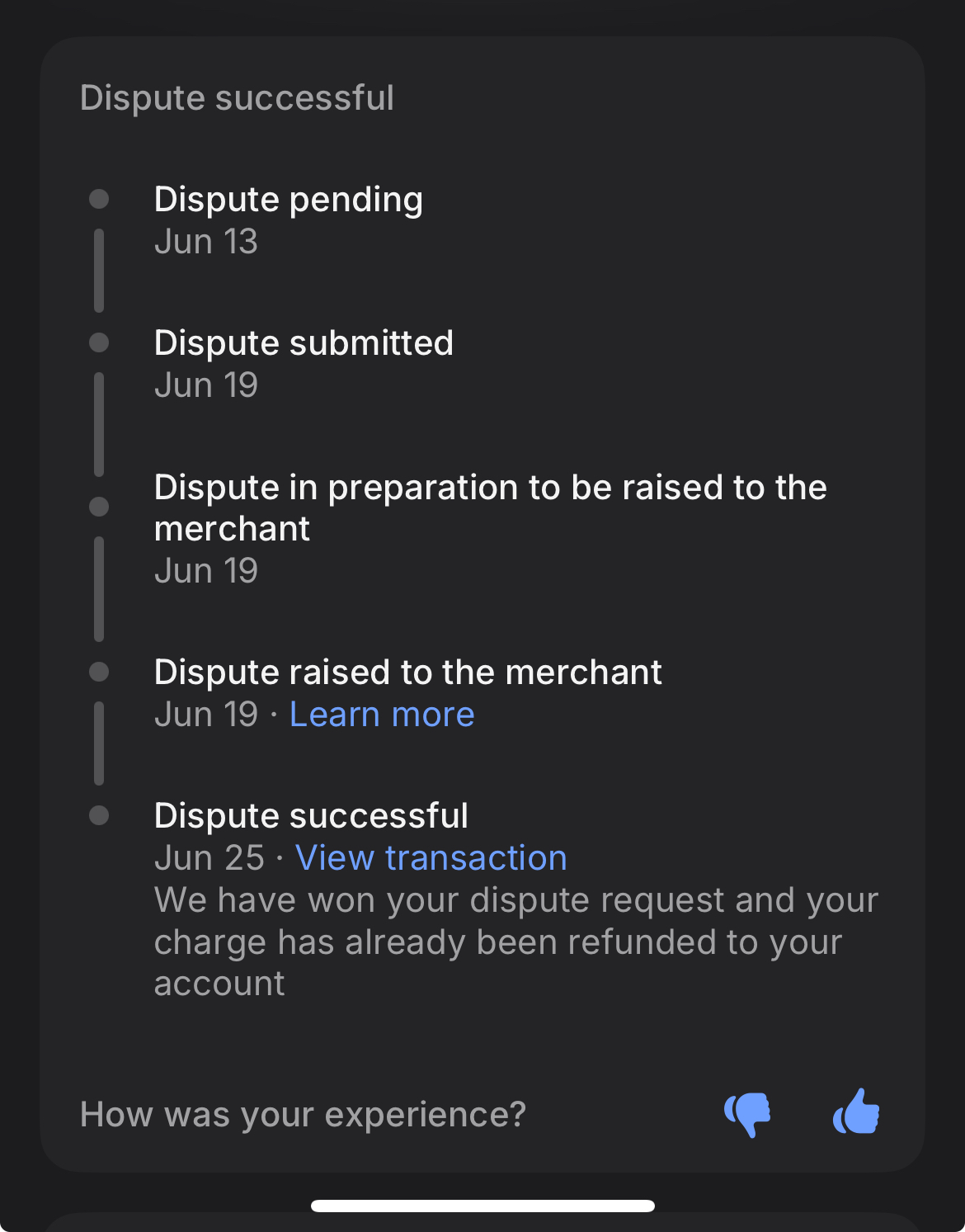
I carried that low-grade annoyance around for days before I finally filed. The process was not friendly. They wanted documentation. A cancellation confirmation email. I went through my inbox. Nothing. No clean record of what I had done. I had my certainty and not much else.
I was close to walking away. What stopped me was not strategy. It was a quieter impulse. Submit what you have.
So I did. Gathered whatever fragments I could find, hit submit without much conviction, and forgot about it.
Weeks later I opened my app to check something unrelated. There was a credit sitting there. The money was back.
What it actually cost me to wait
That credit landed differently than I expected. Not relief. Something closer to embarrassment.
What I had actually done was not complicated to name. I delayed filing a legitimate claim because I was waiting for evidence I did not have. I was building a case in my head for a dispute I had not started. And if I had kept waiting, the outcome would have been decided for me, quietly, by default.
This is the real shape of overthinking. We call it preparation. We dress it up as diligence, as strategy, as not wanting to move before we are ready. But most of the time it is just fear with better branding.
The fear is not complicated. It is the fear of being wrong in public. Of putting something forward that gets rejected. Of moving before the case is airtight. Most of the time none of those fears have the weight we assign them. But they dress up well.
The $39 made this obvious because the stakes were low. I have watched the same pattern play out at much higher cost. Founders sitting on products that were ninety percent ready, waiting for the ten percent that would make them feel safe enough to ship. Operators holding decisions past the point where more data would actually help. Professionals reading the room correctly but waiting for a moment that never arrives cleanly enough. The stakes change. The mechanism never does.
There is a line I use to check myself. If this decision will not cost a life, destroy a critical relationship, or wipe out capital I cannot recover, then waiting is not caution. It is a choice to hand the outcome to chance.
What inertia costs
Action is not a guarantee of success. But inertia has its own cost, and it is easy to miss because nothing visible happens. When you do not move, the situation does not hold still while you think. It moves without you. No data accumulates on your side. No feedback arrives. No position improves.
When you move, even with incomplete information, even with imperfect evidence, even before you feel ready, the world responds. Sometimes the response is a win. Sometimes it is a fast failure that teaches you something real. Both are more useful than standing still.
I got $39 back. That is not the point. The point is that I almost did not try, because I was waiting for a cancellation email that did not exist. Whatever you are sitting on right now, the version of it that gets done with what you have today will almost always beat the version you are still preparing for tomorrow.
Submit the claim.
Written by
Tolu Adetuyi